2026 HVAC Temperature Sensor Supply Chain Crisis: Procurement Guide
Mar 27, 2026Summary:. The 2026 U.S.-Israel-Iran war and the effective closure of the Strait of Hormuz since March 2026 have triggered the largest energy supply shock in modern history-- and the ripple effects are reaching deep into the HVAC temperature sensor supply chain. This article from FocuSens, a 15-year ISO-certified temperature sensor manufacturer based in Hefei, China, explains what's actually happening, what the mainstream media is missing, and what procurement engineers and HVAC system integrators around the world need to do right now.
When U.S. and Israeli forces launched Operation Epic Fury on February 28, 2026, most HVAC procurement managers watching the news assumed the conflict was someone else's problem. Oil prices, geopolitics, regional instability-- these were concerns for the energy sector, not for engineers sourcing wall-mount room temperature sensors or ducted HVAC transmitters.
That assumption is now costing real money. Here is what is actually happening, as of late March 2026, inside the global supply chain that supports the temperature sensor and HVAC controls industry-- and why the narrative most industry publications are telling you is dangerously incomplete.
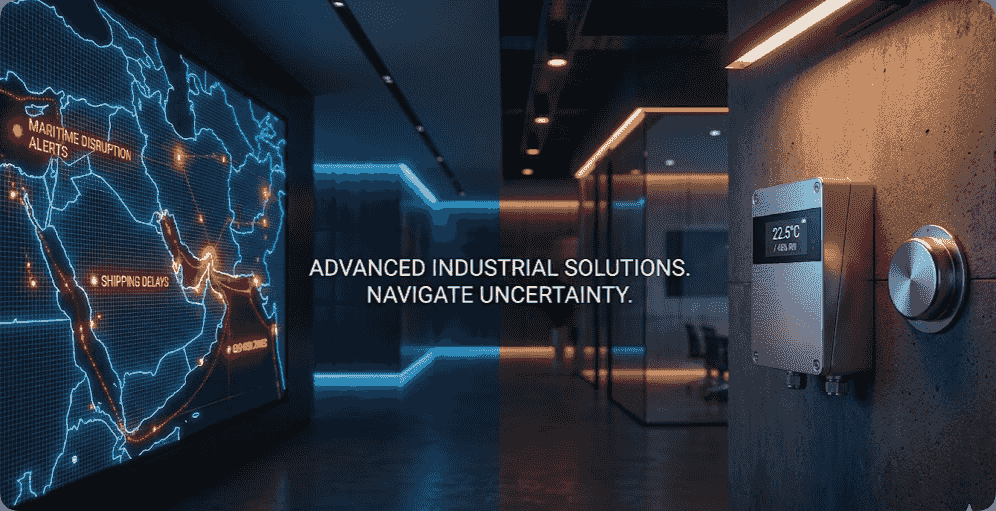
On March 2, 2026, tanker traffic through the Strait of Hormuz dropped to near zero. War risk insurance was cancelled from March 5. The four largest container carriers-- Maersk, Hapag-Lloyd, CMA CGM and MSC-- suspended transits through the strait. Log-hub. Fertilizer and agricultural flows, rubber, electronics, batteries, pharmaceuticals, Asian-based garment manufacturing and sugar are among the supply chains already facing severe disruption. CNBC Temperature sensing components are part of that same industrial ecosystem-- and here is why.
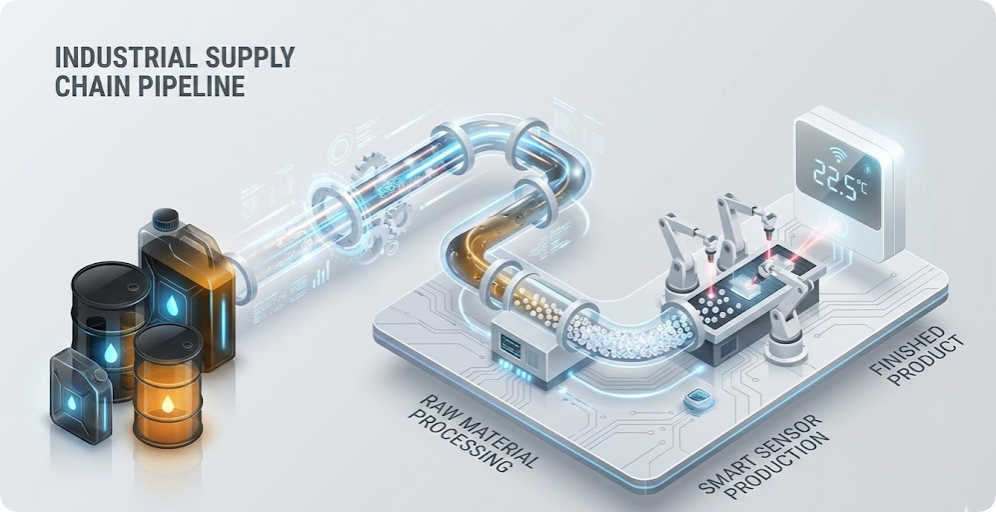
The plastic housings, overmould compounds, and cable insulation materials used in virtually every wall mount room temperature sensor, HVAC duct probe, and smart temperature transmitter are downstream products of petrochemical feedstocks. About 85% of polyethylene exports from the Middle East transit through the Strait of Hormuz. Shortages and backlogs are raising the price of packaging, automotive components, and consumer goods. CNBC
For sensor manufacturers, this translates directly to rising costs for PBT housings, TPE overmould materials, and epoxy encapsulation compounds-- the same materials used in NTC thermistor probes, RTD sensors, and temperature transmitters. UK and EU chemical and steel manufacturers are already imposing input cost surcharges of up to 30%. Log-hub Sensor buyers who locked in fixed-price orders before March 2026 are protected. Those who did not are now renegotiating.
EV batteries and semiconductors for 2026 production are stranded in the Gulf. Supplychaindigital For HVAC smart temperature transmitters-- products that integrate microprocessors, ADC chips, and RS485/4 -20 mA signal conditioning circuits-- the semiconductor component pipeline is under genuine strain. Extended transit times undermine just-in-time manufacturing models. Delays in component shipments risk production slowdowns for consumer electronics and electric vehicles. Conqueror Blog
The same logic applies to intelligent HVAC sensor systems. The forced rerouting of maritime shipping around the Cape of Good Hope imposes approximately 19 additional days in transit time, while insurance and transport costs rise sharply. Habtoorresearch.
Iraq is a significant and growing market for building automation, HVAC systems, and industrial temperature monitoring-- particularly across the oil infrastructure, commercial construction, and hospitality sectors that have driven economic growth over the past decade. The war has placed Iraq in an impossible position.
Iraq's oil export volume has declined by more than 70 percent since traffic through the Strait of Hormuz ceased in early March, and Baghdad has few alternatives to compensate for the shortfall. The Soufan Center. Iraq relies on oil revenue for 90 percent of its income. Al Jazeera Projects that were mid-procurement-- commercial HVAC installations, smart building retrofits, industrial process monitoring systems-- are now frozen or significantly delayed as Iraqi businesses and government agencies grapple with a fiscal shock of historic proportions.
Here is what nobody in the trade press is saying out loud:. The energy shock is creating explosive demand for the exact products FocuSens manufactures.
Think about the logic chain. Oil prices have surpassed $100 per barrel, driving even sharper increases in refined products such as diesel, jet fuel and liquefied petroleum gas. IEA Energy costs are rising across every sector. Every building, factory, hospital, and data center that uses HVAC is now facing dramatically higher operating costs. The immediate response from governments and facility managers worldwide is energy optimization.
Thailand is promoting a shift from suits to T-shirts for workers to lessen reliance on air conditioning. Government offices have been advised to set air-conditioning temperatures between 26-- 27 ° C, reduce elevator use and share cars. World Economic Forum Sri Lanka has ordered buildings to reduce energy consumption by 25 percent. European governments are activating emergency energy conservation frameworks.
You can not optimize what you can not accurately measure. Precise zone-by-zone temperature sensing-- exactly the function served by wall mount room temperature sensors, HVAC duct temperature sensors, and smart temperature transmitters-- is the foundational enabling technology for any serious building energy management program. A building that reduces HVAC energy consumption by 15 to 20 percent through better temperature zoning and sensor-driven control logic pays for its sensor investment within months, not years, especially at current energy prices.
The demand signal is there. The policy pressure is there. The economic incentive is overwhelming. What intelligent procurement teams are doing right now is not pausing sensor orders-- they are accelerating them, before component costs rise further and lead times extend.
Based on fifteen years of serving B2B temperature sensor customers across more than 60 countries, here is what FocuSens's engineering team recommends for buyers navigating this disruption:.
Audit your current sensor inventory depth against your Q2-Q3 project pipeline. If your manufacturing inputs, finished goods, or consumables move through Gulf ports, your replenishment cycle has just extended by two to four weeks minimum. Build safety stock now, before your current inventory runs low. Carra Globe.
Confirm your sensor supplier's raw material sourcing geography. Suppliers dependent on Gulf-sourced petrochemical inputs for plastic housings and cable compounds will see cost increases in Q2 2026. FocuSens sources the majority of its plastic materials domestically within China's Anhui province supply base, significantly reducing Gulf-related petrochemical exposure.
Prioritize suppliers with vertically integrated testing capability. With global logistics under strain, the ability to verify sensor performance before shipment-- rather than discovering specification drift after arrival-- is more valuable than ever. FocuSens operates 0.01 ° C precision thermal bath calibration equipment and precision constant humidity chambers in-house, enabling full specification verification without third-party dependency.
Evaluate smart transmitter designs that reduce downstream sensor count. A single high-accuracy smart temperature transmitter with RS485/Modbus output serving multiple monitoring zones delivers better ROI under current cost conditions than multiple discrete sensing points requiring individual calibration and maintenance. Our FHT series temperature humidity transmitters and ducted HVAC transmitters are engineered precisely for this consolidation use case.
Lock in fixed pricing on standard HVAC sensor SKUs before Q2 2026 price reviews. Brent crude oil prices jumped about 15% in the opening days of the conflict, then surged toward $120 a barrel as the market began pricing in the risk of sustained disruption. World Economic Forum These cost pressures will reach sensor manufacturing input costs within 60 to 90 days. The window to confirm orders at current pricing is closing.
We understand that our customers in Europe, North America, Southeast Asia, and the Middle East need transparent, factual communication from their sensor supply partners-- not reassuring platitudes. Current status as of March 27, 2026:.
| Supply Chain Metric | FocuSens Current Status (March 2026) | Recommendation for Buyers |
| Production Continuity | 100% Operational (Hefei, China) | Reliable capacity for new orders |
| Raw Material Exposure | Minimal (Domestic sourcing for PBT/PA66) | Protected from Gulf cost surges |
| Component Lead Times | Normal parameters for standard SKUs | Confirm smart transmitter orders in 4-6 weeks |
| Logistics / Transit | Rerouted via Cape of Good Hope | Factor +10 to 14 days for Middle East |
| Pricing Stability | Prices locked until April 30, 2026 | Confirm Q2-Q3 orders before April 30 |
Production continuity: All FocuSens manufacturing lines at our Hefei, Anhui facility are operating at normal capacity. We are ISO 9001:2015 certified and have not experienced any production disruption linked to the current Middle East conflict.
Petrochemical input exposure: Our primary plastic housing materials (PBT, PA66, stainless steel SUS304/SUS316 for probes) are sourced through domestic Chinese supply chains with minimal direct Gulf dependency.
Semiconductor component status: We are actively monitoring NTC thermistor element, microcontroller, and signal conditioning chip availability. Current lead times for standard SKUs are within normal parameters. We recommend customers requiring smart temperature transmitters with analog or digital output confirm orders within the next 4-- 6 weeks to protect Q3 delivery commitments.
Logistics routing: We have activated Cape of Good Hope routing through our logistics partners for all Middle East-bound shipments, consistent with industry-wide carrier adjustments.
Estimated transit time additions: 10-- 14 days for UAE/Saudi Arabia destinations. We recommend customers factor this into project timelines.
Pricing: We are holding current pricing on our standard wall mount room temperature sensor series, HVAC duct temperature probe series, and smart temperature transmitter FHT series through April 30, 2026. Customers are encouraged to confirm orders before this date.
There is a longer arc here that matters for anyone in the HVAC sensing industry. What begins as a battlefield shock hardens into a geoeconomic one. World Economic Forum Historically, every major energy price shock has accelerated the adoption of energy efficiency technology. The 1973 oil embargo accelerated building insulation standards across North America and Europe. The 1979 Iranian Revolution triggered the first wave of HVAC controls modernization in commercial real estate. The 2022 Russia-Ukraine conflict drove unprecedented demand for smart building automation across European markets.
The 2026 Middle East conflict is following the same pattern-- but faster, and across more markets simultaneously. The war has precipitated a second major energy crisis for Europe, primarily through the suspension of Qatari LNG and the closure of the Strait of Hormuz. The conflict coincided with historically low European gas storage levels-- estimated at just 30% capacity-- causing Dutch TTF gas benchmarks to nearly double within days. Wikipedia.
Europe's building automation sector, which had already been accelerating post-2022, is now experiencing a genuine demand surge for precision HVAC temperature sensing. The same pattern is emerging in Southeast Asia, where governments from Thailand to Bangladesh are mandating energy consumption reductions. Smart temperature transmitters, wall-mount room temperature sensors with integrated utility boxes, and precision HVAC duct sensors are not optional components in a building energy management system. They are the measurement infrastructure upon which every efficiency gain depends.
The 2026 Iraq-Iran regional conflict-- and the broader U.S.-Israel-Iran war that it is embedded within-- will not reverse the underlying demand for intelligent HVAC temperature sensing. It will accelerate it. Energy costs are rising. Building operators are under regulatory and economic pressure to demonstrate measurable efficiency improvements. The technology to achieve those improvements exists, is well-proven, and is manufactured in geographically stable supply chains outside the conflict zone.
FocuSens has served B2B customers across over 60 countries for more than 15 years from our facility in Hefei, China. We have operated through the 2008 financial crisis, the 2020 COVID supply disruption, and the 2022 Red Sea crisis. We build sensors that outlast the disruptions of any given moment.
If you are an HVAC system integrator, building automation contractor, or OEM equipment manufacturer evaluating your sensor supply position in light of the current crisis, we invite you to contact our engineering team directly for a supply availability review and a firm quotation. The window to protect your Q2-Q3 project delivery commitments is narrowing. The cost of waiting is measurable. The cost of acting now is not.
FocuSens and Control Technology Co., Ltd. (FocuSens) is an ISO 9001:2015 certified, nationally recognized High-Tech Enterprise headquartered in Hefei, Anhui, China. With over 15 years of field experience, FocuSens designs, develops, and manufactures NTC thermistors, PTC thermistors, RTD sensors (PT100/PT500/PT1000), thermocouples, digital temperature sensors, wall mount room temperature sensors, HVAC duct temperature sensors, smart temperature transmitters, humidity transmitters, and magnetic level switch sensors. Products are RoHS and REACH compliant and exported to over 60 countries across Western Europe, North America, and Southeast Asia.
No. 1 XiSan Road, Electromechanical Industry Park, High & New Tech Zone, Hefei, Anhui, China.
No.1 XiSan Road, Electromechanical Industry Park , High&New Tech.Zone. Hefei,Anhui,China
Tel : +86-551-69109668
Whatsapp : +86-13339100504
Email : info@focusens.com
Skype : melodyliu520






 +86-551-69109668