DS18B20 vs. NTC Thermistors: The Ultimate BMS Sensor Comparison (2026 Guide)
Jan 15, 2026Does your BMS need the simplicity of digital or the speed of analog? In the high-stakes world of Battery Management Systems (BMS), choosing the wrong temperature sensor isn't just an inconvenience—it's a safety risk.
This guide definitively compares the Maxim DS18B20 (Digital) against standard 10kΩ NTC Thermistors (Analog) to help you decide which is right for your specific EV or energy storage project.
If you are in a rush, here is the immediate answer based on your specific use case. The "best" sensor depends entirely on whether you are building a mass-production vehicle or a DIY prototype.
Winner: NTC Thermistor (e.g., Focusens MFP-2 Series)
Winner: DS18B20 (Digital)
NTC Thermistor vs DS18B20 Digital Sensor Comparison
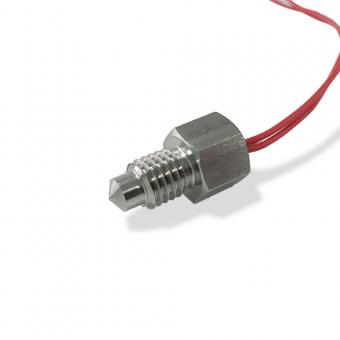
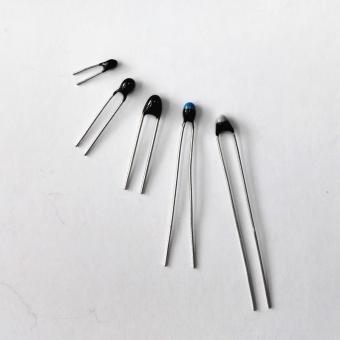
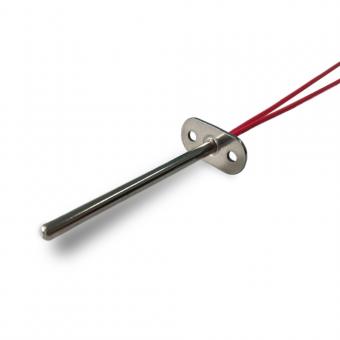
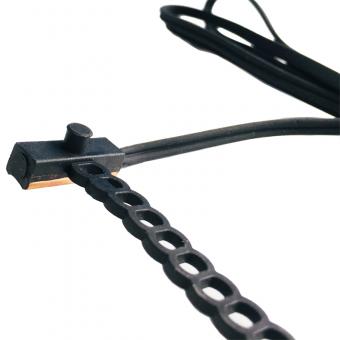
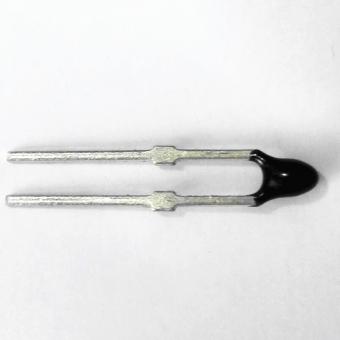
Fig 1. Focusens NTC Thermistor (Left) vs. Waterproof DS18B20 Probe (Right)
I am an embedded systems engineer specializing in battery monitoring solutions. This comparison is supported by data from leading sensor manufacturers like Focus Sensing and Control Technology (Focusens), an ISO-certified factory specializing in both automotive-grade NTCs and digital sensing solutions.
This comparison is based on:
This table highlights why these two sensors serve different masters.
| Feature | DS18B20 (Digital) | NTC Thermistor (Analog) | Winner for EV BMS |
|---|---|---|---|
| Interface | 1-Wire Digital (Serial) | Analog Voltage (ADC req.) | DS18B20 (Simplicity) |
| Response Time | Slow (Max 750ms @ 12-bit) | Fast (Instant/Thermal constant) | NTC (Critical Safety) |
| Accuracy | ±0.5°C (Factory Calibrated) | Varies (Need Calibration) | DS18B20 (Out of Box) |
| Wiring | Daisy Chain (Parallel) | Individual/Matrix (Star) | DS18B20 |
| Cost (Volume) | High ($1.00+) | Extremely Low ($0.05) | NTC |
| Customization | Standard Probes | Highly Customizable (Lugs, Threads) | NTC (Focusens Specialty) |
In an Electric Vehicle, the BMS has one primary job: Prevent Thermal Runaway.
An NTC (Negative Temperature Coefficient) thermistor is a passive resistor. As temperature changes, resistance changes—instantly.
The DS18B20 is an active integrated circuit. It must "read" the temperature and then "convert" it to digital data.
Verdict: If safety depends on microsecond reaction, NTC wins.
This is where the DS18B20 shines and why the DIY community loves it.
Imagine a battery pack with 96 cells. If you use NTCs, you need nearly 200 wires running back to the BMS or complex Multiplexers. This creates a heavy wiring harness.
The DS18B20 uses the 1-Wire bus protocol.
Verdict: If you hate wiring or have limited GPIO pins, DS18B20 wins.
Goal: Designing a 400V/800V traction battery for a road-legal vehicle.
Goal: Recycling 18650 laptop cells into a 48V home battery.
A: Yes. Manufacturers like Focusens specialize in custom wire harnesses. Whether you need NTCs spaced 5cm apart or a 3-meter DS18B20 probe, they can manufacture it to your exact drawing.
A: Yes. For some applications, Digital Output Modules or specialized ICs are used. Focusens also supplies other digital sensors, such as a TMP117 I2C temperature probe, if you need an I2C interface instead of 1-Wire.
The battle between DS18B20 vs. NTC isn't about which sensor is "better" in a vacuum—it's about System Architecture.
Ready to build? Don't risk your battery pack with generic, uncalibrated sensors.
Check out Focusens' EV Battery Sensors Catalog
View NTC Thermistor Options | View DS18B20 Digital Probes
Disclaimer: This article is for educational purposes. Always adhere to local safety standards. Focusens is a registered trademark of Focus Sensing and Control Technology Co., Ltd.
No.1 XiSan Road, Electromechanical Industry Park , High&New Tech.Zone. Hefei,Anhui,China
Tel : +86-551-69109668
Whatsapp : +86-13339100504
Email : info@focusens.com
Skype : melodyliu520






 +86-551-69109668